







Finishing a basement bedroom sounds straightforward until your contractor or building inspector mentions three words: egress window requirement. Suddenly, a fairly simple renovation has a new line item — one that involves cutting through your foundation wall.
Most homeowners don't know what an egress window actually is until they need one. By the time the question comes up, the project is already in motion. Understanding what's required, why it matters, and what the installation process actually involves saves significant time, money, and stress.

What Is a Basement Egress Window and Why Does It Exist?
An egress window is a window opening large enough for an occupant to escape through during an emergency — a fire, a gas leak, a structural event — and large enough for a firefighter in full gear to enter. In a basement, where the only other exit is typically a staircase through the interior of the house, a properly sized egress window can be the difference between a safe evacuation and a catastrophic one.
The requirement isn't about aesthetics or comfort. It's a life safety code, enforced by building departments across the country under the International Residential Code (IRC). Any time a basement space is used as a bedroom or habitable living room — whether it's a primary bedroom, a guest room, a rental unit, or a home office with a sleeping area — an egress window is legally required to occupy the space.
The Exact IRC Egress Window Code Requirements
The International Residential Code sets minimum standards that most municipalities adopt, though local amendments can add stricter requirements. Before starting any basement bedroom project, verify the specific code with your local building department. The IRC baseline requirements are:
Minimum net clear opening: 5.7 square feet. This is the actual usable opening when the window is fully open — not the frame size or the glass size. At grade level (where the window sill is at or near the ground), the minimum reduces to 5.0 square feet.
Minimum opening width: 20 inches. The window, when fully opened, must provide at least 20 inches of clear horizontal space.
Minimum opening height: 24 inches. The window must provide at least 24 inches of clear vertical opening when open.
Maximum sill height: 44 inches from the finished floor. The bottom of the window opening cannot be higher than 44 inches above the floor, ensuring an occupant can reach and climb through without assistance.
These four measurements must all be met simultaneously — a window that meets the area requirement but not the width requirement does not comply.
Window Well Requirements for Below-Grade Installations
Because basement windows sit below grade — the ground surrounding the foundation is typically higher than the window itself — a window well is required to allow light, air, and emergency access to the egress window.
Window well requirements under the IRC include:
- Minimum horizontal projection and width: At least 36 inches of clear projection from the wall, and at least 36 inches wide, to allow a person to maneuver through the opening
- Depth greater than 44 inches: If the window well is deeper than 44 inches, a permanently attached ladder or steps must be provided and cannot obstruct the window opening
- Drainage: Window wells must drain properly to prevent water accumulation — typically via a gravel base and, where required, a drain connection
The window well is installed on the exterior of the foundation wall, which means excavating the soil adjacent to the wall before the window opening is cut.
When Is an Egress Window Legally Required?
The short answer: any time a basement space is used as a bedroom, a sleeping area, or any habitable room where the IRC requires emergency escape access.
This includes:
- Basement bedrooms in primary residences — any room where someone regularly sleeps requires egress
- Basement rental units and in-law suites — egress windows are typically required before a certificate of occupancy is issued for a rental unit
- Basement additions and remodels that add bedroom space — if the remodel creates or converts a room to a bedroom, an egress window is required as a condition of the building permit
- New construction with a finished basement plan — builders must include egress windows in any below-grade sleeping room from the start
Homeowners sometimes assume that because their basement has existing windows, egress requirements are already met. In most cases, standard basement windows do not meet the minimum net clear opening size, and a larger opening must be cut.
What the Installation Process Actually Involves
Egress window installation is primarily a concrete cutting job. Creating the opening requires sawing through the foundation wall — whether that's poured concrete, concrete block, or masonry — to the precise dimensions required by code and the selected window size. This is not a job for general contractors or window installers who do not have concrete cutting equipment and experience.
The process, as Precision Concrete Cutters carries it out, follows these steps:
- Site assessment and measurement — confirming the wall material, thickness, and the exact opening dimensions required
- GPR scanning — Ground Penetrating Radar scanning of the foundation wall to locate embedded rebar, utility conduits, and any other elements that must be avoided during cutting
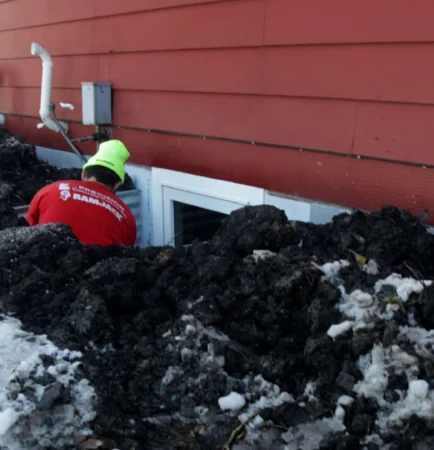
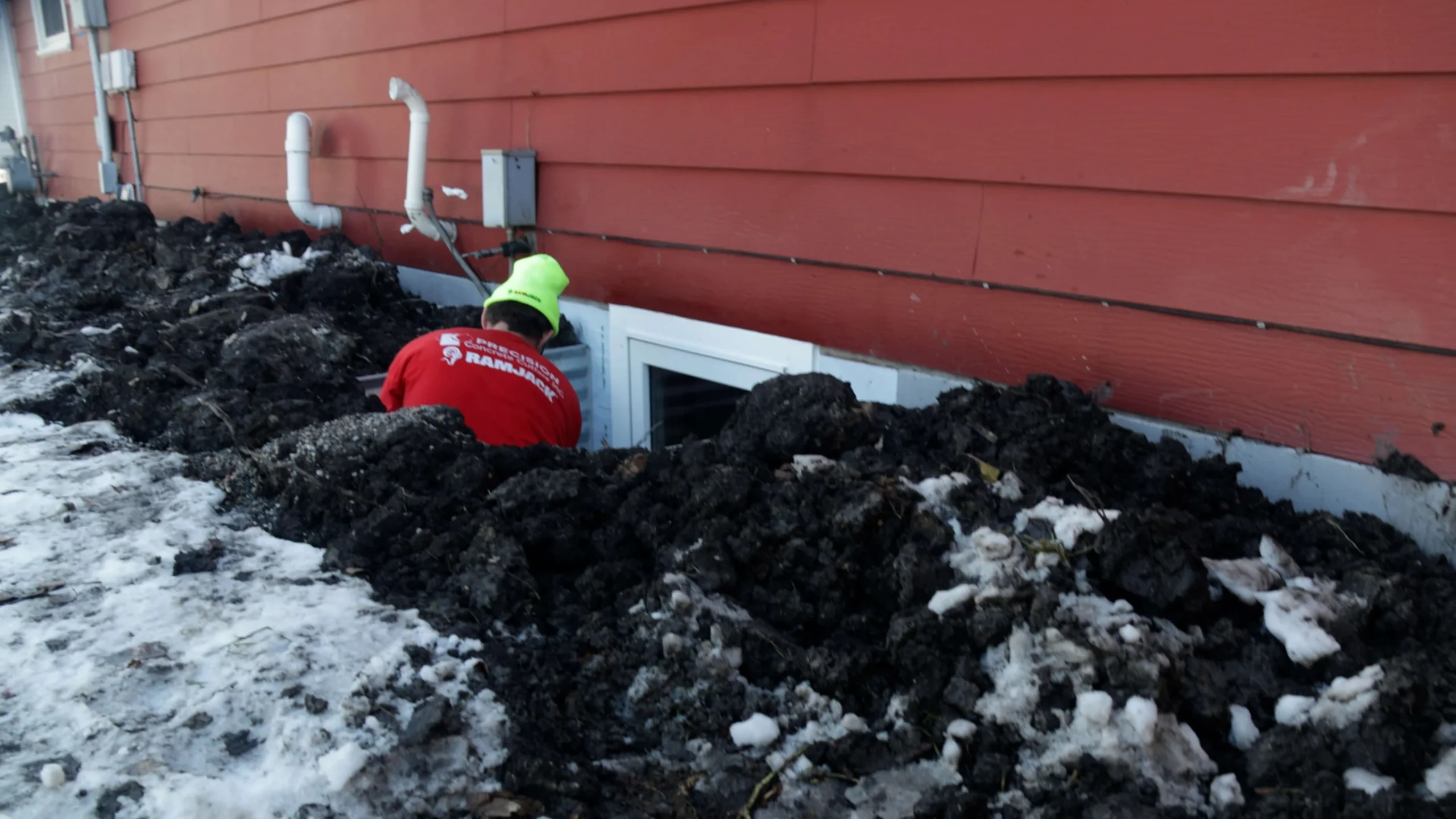
- Exterior excavation — digging out the soil adjacent to the foundation to expose the exterior wall face and create space for the window well
- Precision saw cutting — using diamond-blade wall saws to cut the opening to exact dimensions with clean, controlled cuts that do not transmit damaging vibration to the surrounding structure
- Concrete removal — carefully extracting and disposing of the cut section
- Window well installation — setting the window well into the excavation against the foundation wall, with a gravel drainage base
- Window frame and glazing installation — fitting the egress window unit into the opening and weatherproofing around the frame
- Interior finishing — framing, insulation, and trim work around the new opening on the inside of the basement
The complete process is typically completed in one to two days, depending on wall thickness and site conditions.
Do You Need a Permit for Egress Window Installation?
Yes — in virtually all jurisdictions, a building permit is required before an egress window opening can be created in a foundation wall. The permit process typically involves submitting the proposed window dimensions and location, paying a permit fee, and scheduling an inspection upon completion.
Pulling the permit is important for several reasons beyond legal compliance: it ensures the work is inspected and recorded, which matters for homeowners' insurance, home resale disclosure requirements, and the legal use of the basement bedroom by a tenant or future occupant. Skipping the permit creates a liability that surfaces at the worst possible time — typically during a home sale.
Precision Concrete Cutters works to code-compliant specifications on every egress window project and can advise on local permit requirements based on your location.
FAQ: Basement Egress Window Requirements
Find Answers to our Question about Our Consulting Coverage Options.
Still Have Questions?
We’re here to help you!
The minimum net clear opening for a basement egress window is 5.7 square feet under the IRC, with a minimum width of 20 inches and a minimum height of 24 inches when fully open. The window sill cannot be more than 44 inches from the finished floor. These are baseline requirements — local codes may be stricter.
Not necessarily, but most standard basement windows do not meet egress requirements because their openable area is too small. The only way to confirm compliance is to measure the net clear opening when the window is fully open against the IRC minimums. In most cases, a larger opening must be cut in the foundation wall.
The window unit itself may be installed by a capable DIYer, but cutting the opening in a concrete or masonry foundation wall requires professional diamond-blade concrete cutting equipment and expertise. Attempting to create the opening with a standard saw or chisel risks damaging the structural integrity of the foundation and is not recommended.
Costs vary based on foundation wall material and thickness, depth of basement, window well style, and local labor rates. A typical egress window installation by a specialist concrete cutting contractor ranges from around $2,500 to $6,000 or more for the complete project, including cutting, window well, window unit, and finishing. Precision Concrete Cutters provides free site assessments and fixed-price quotes.
Most egress window installations are completed within one to two days from start to finish, assuming no unexpected subsurface conditions are encountered. GPR scanning before cutting helps identify any complications before the work begins, keeping the project on schedule.