









A crack in your foundation wall is one of those discoveries that sends most homeowners straight to their phone — not to call a contractor, but to search the internet for reassurance that everything is probably fine.
Sometimes everything is fine. Sometimes it isn't. The problem is that "foundation crack" covers an enormous range of situations, from normal concrete curing behavior to early signs of structural failure. The direction, pattern, location, and behavior of a crack tells a trained eye almost everything needed to assess severity — and it can tell you a great deal too, if you know what to look for.
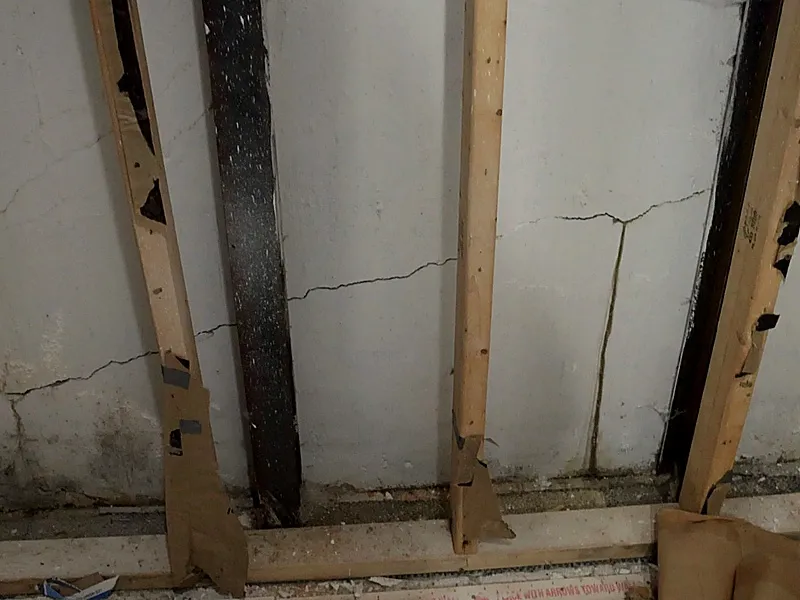
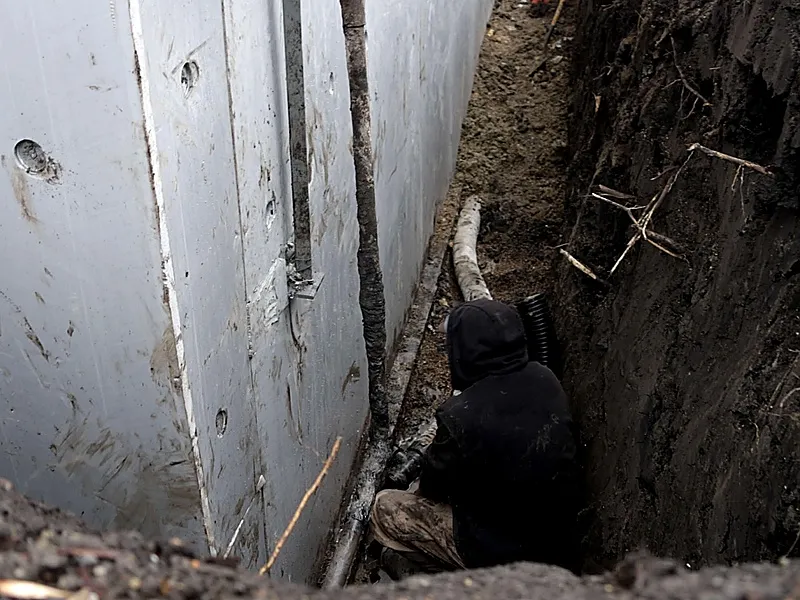
Why the Direction and Pattern of a Foundation Crack Tells You Almost Everything
Concrete cracks in response to forces. Those forces — whether they come from soil pressure, settlement, water, freeze-thaw cycles, or overloading — leave a signature in the crack they create. A crack running horizontally across a poured concrete wall signals a fundamentally different problem than a thin vertical crack running from top to bottom.
Understanding what each pattern means is the first step to knowing whether you need to call someone immediately, monitor the situation, or simply seal the crack to keep moisture out.
Horizontal Foundation Cracks — The Most Structurally Serious Type
Horizontal cracks running across a poured concrete wall — typically appearing between one and three feet below grade — are the type that should prompt an immediate call to a foundation specialist. They are the single most serious category of foundation crack.
What causes them: Horizontal cracks are caused by lateral soil pressure — the force of saturated, heavy soil bearing against the exterior of the foundation wall. When the soil outside becomes waterlogged, it expands and pushes inward. The mid-point of the wall, which has the least structural support, is where it buckles.
Why they're serious: A horizontal crack indicates that the foundation wall is bending inward under load. If the force continues without repair, the wall can bow progressively — and eventually fail. Once inward movement begins, it typically accelerates without intervention.
What to watch for: Horizontal cracks that are wider in the center than at the ends, any visible bowing of the wall surface, cracks that have recently appeared or widened rapidly, and accompanying floor cracks parallel to the wall are all signs of active pressure.
Repair methods used by Precision Concrete Cutters:
- Carbon fiber reinforcement straps — bonded to the wall surface, these high-tensile straps prevent further inward movement without requiring excavation
- Steel wall anchors — driven through the wall into stable soil beyond the pressure zone, anchors apply counter-force to stabilize and, over time, gradually straighten the wall
- Push piers and underpinning — for walls where the footing has also shifted, pier systems stabilize the foundation at load-bearing depth
Vertical Foundation Cracks — Less Urgent, But Worth Monitoring
Vertical cracks running from near the top of the foundation wall downward — or from the base of a window or door opening downward — are far more common than horizontal cracks, and in most cases are less structurally threatening.
What causes them: Two distinct mechanisms produce vertical cracks. Shrinkage cracks form as concrete cures and dries during the first years after construction — they are typically thin (hairline to 1/8 inch), uniform in width from top to bottom, and cosmetically unpleasant but structurally inconsequential. Settlement cracks form when the soil beneath the footing settles unevenly, causing one section of the foundation to move downward relative to another.
How to tell them apart: Shrinkage cracks are typically symmetrical, parallel, and consistent in width. Settlement cracks often widen at one end, appear at stress concentration points (corners, window openings), or are accompanied by corresponding cracks on the interior floor or walls of the basement.
Repair method: Both types are typically addressed with injection repair. For dry, dormant cracks, epoxy injection fills the crack under pressure and cures to a rigidity stronger than the surrounding concrete, structurally bonding the two sides. For cracks with active moisture or water seepage, polyurethane foam injection is the preferred method — it expands on contact with moisture and cures as a flexible, waterproof seal.
Diagonal and Stair-Step Cracks — A Warning Sign for Differential Settlement
Diagonal cracks — running at roughly 45 degrees from corners of windows, doors, or the top corners of the wall — indicate differential settlement: the soil beneath one section of the foundation is settling at a different rate than the adjacent section. The crack typically widens at the upper end.
In concrete block and brick foundations, this same pattern appears as stair-step cracking — following the mortar joints in a stepped diagonal pattern across the block courses. The principle is the same: uneven settlement is pulling one section of the wall downward while another section remains stable.
What causes differential settlement: Clay-heavy soils that shrink dramatically when dry and expand when wet are the most common culprit. Poor drainage that keeps one area of the soil perpetually saturated, tree root activity near the foundation, and inadequate original subgrade preparation all contribute.
Repair methods:
- Epoxy injection for sealing and stabilizing the crack itself
- Helical or push pier underpinning where the settlement is active or ongoing — piers are driven to stable, load-bearing soil or bedrock and transfer the structural load away from the failing subgrade
- Drainage correction to address the root cause of the soil movement
Hairline Cracks — Normal Concrete Behavior or an Early Warning?
Very thin cracks — barely visible to the naked eye — distributed across a poured concrete wall are, in the majority of cases, the result of normal concrete shrinkage during curing. Concrete loses moisture as it sets, and that shrinkage creates micro-cracking that is typical and expected.
Hairline cracks become a concern when they are concentrated in one area (suggesting stress rather than uniform shrinkage), when they are growing (measure and date them to track progression), or when they are allowing water to pass through the wall. Injection repair is straightforward and inexpensive at this stage, which is exactly why addressing them early is worthwhile.
The 5 Warning Signs That Mean You Should Call a Foundation Specialist Today
Regardless of crack type, the following signs indicate that the situation requires professional assessment without delay:
- Any horizontal crack, especially one showing central bowing or active widening
- A crack that has visibly widened since you first noticed it — take photos and measure
- Multiple cracks appearing simultaneously, suggesting a systemic soil or drainage event
- Water actively entering through the crack after rain, particularly if accompanied by white mineral deposits (efflorescence)
- Cracks accompanied by sticking doors, sloping floors, or gaps between walls and ceiling — these suggest whole-structure movement, not just a cosmetic surface crack
FAQ: Foundation Cracks
Find Answers to our Question about Our Consulting Coverage Options.
Still Have Questions?
We’re here to help you!
Yes — horizontal cracks are the most structurally serious type of foundation crack and always warrant immediate professional assessment. They indicate that lateral soil pressure is bending the wall inward, and without repair, the wall can bow progressively and eventually fail.
A structural crack affects the load-bearing capacity or stability of the foundation wall — horizontal cracks, wide diagonal cracks, and cracks with significant displacement fall into this category. Non-structural cracks — typically thin, uniform shrinkage cracks — affect the wall’s appearance and water resistance but not its structural integrity. The distinction requires professional assessment; do not self-diagnose structural cracks based on appearance alone.
Mark the ends of the crack with a pencil line and note the date. Photograph it with a ruler or coin in frame for scale. Check again in two to four weeks. Widening by more than 1/16 of an inch, extension beyond the marked endpoints, or new offset (one side of the crack now sits higher than the other) all indicate active movement.
Surface sealing with hydraulic cement or caulk is a temporary cosmetic measure, not a structural repair. For proper sealing of dormant cracks, professional epoxy injection fills the crack through its full depth under controlled pressure. For active water leaks, polyurethane foam injection is more appropriate. DIY surface patches do not address the underlying cause or restore structural integrity.
Crack injection repairs are typically completed in a single day with no excavation required. Carbon fiber strap installations take one to two days. Pier underpinning systems for settling foundations take two to five days, depending on the number of piers required. Precision Concrete Cutters provides free site assessments and can advise on exact timelines before any commitment is made.
Noticed a crack in your foundation wall? Don’t wait to find out whether it matters. Precision Concrete Cutters provides free foundation assessments and will give you a straight answer about what you’re dealing with — and what, if anything, needs to happen next.


0 comments on “Horizontal, Vertical, and Diagonal Foundation Cracks: Which Type Is Serious and What to Do About Each”
Pellentesque sollicitudin congue dolor non aliquam Morbi volutpat nisi vel ultricies urnacon dimentum sapien neque lobortis tortor, quis efficitur mi ipsum eu metus Praesent eleifend orci sit vehicula.