







Every basement waterproofing company has a preferred method. Interior drainage specialists will explain at length why interior systems are superior. Exterior waterproofing companies will tell you that anything less than excavation is a band-aid. What neither group tends to do is give you a genuinely neutral comparison of both options — because they only sell one of them.
Precision Concrete Cutters performs both interior slabs cutting for drain tile systems and exterior waterproofing, which puts us in a fairly unusual position: we have no financial reason to steer you toward one method over the other. What follows is the straightforward comparison you're unlikely to find from a contractor who only offers one option.
Understanding the Core Difference — Where Each System Intercepts Water
Interior and exterior waterproofing address the same fundamental problem — water entering your basement — but they intercept that water at completely different points in its journey.
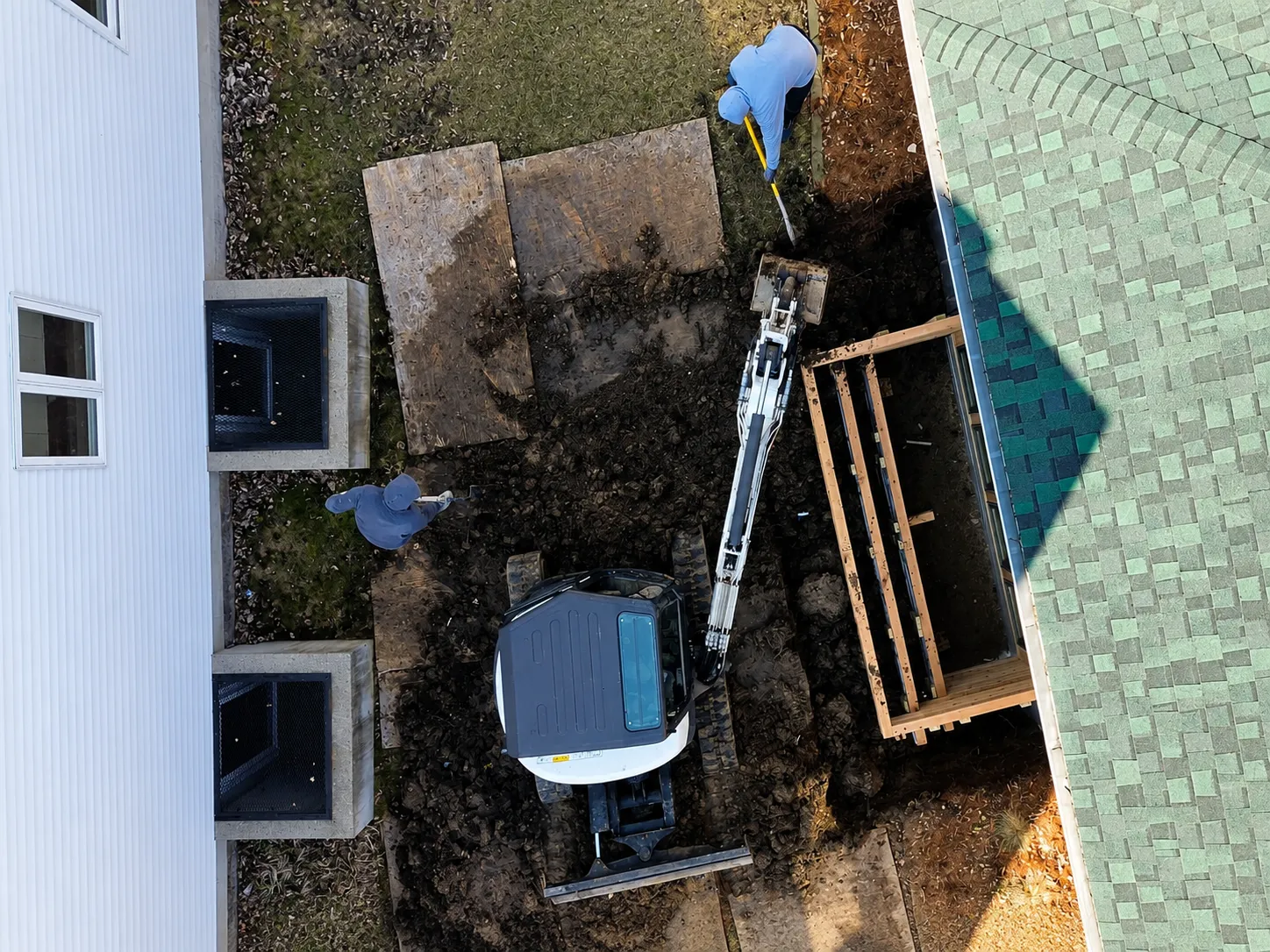
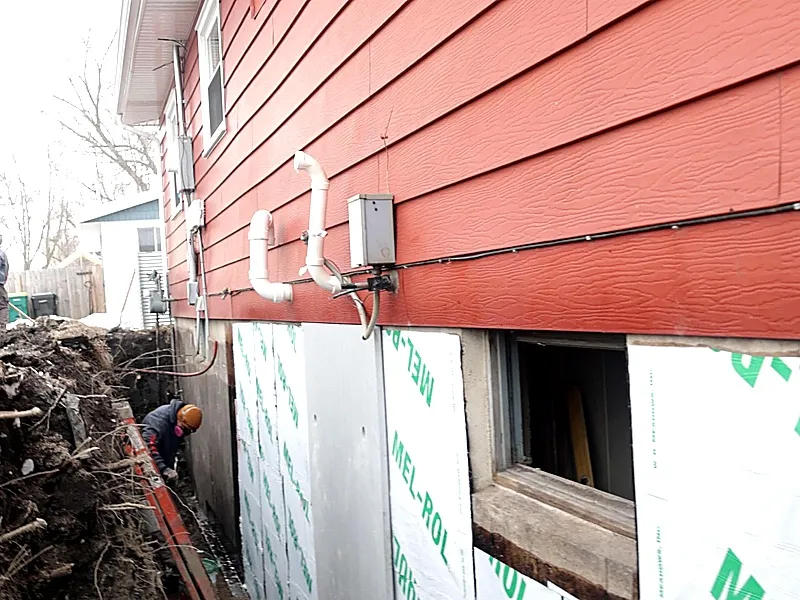
Exterior waterproofing stops water before it reaches your foundation wall. It works from the outside in.
Interior waterproofing accepts that some water will enter the wall and manages it once it does, routing it harmlessly away before it causes damage. It works from the inside out.
Neither approach is inherently superior. The right choice depends on your specific situation, your budget, the source of your water problem, and the age and condition of your foundation.
How Interior Waterproofing (Drain Tile) Works — Step by Step
Interior drainage, commonly called a drain tile system, French drain, or interior perimeter drain, is the most widely installed residential basement waterproofing solution.
Here is exactly what the installation involves:
- Concrete saw cutting— the perimeter of the basement concrete floor slab is cut with diamond-blade saws, typically 4 to 6 inches wide, along the full perimeter of the basement
- Excavation of the trench— the cut section is broken out and the trench is excavated down to the footing level
- Drain pipe installation— a perforated PVC or corrugated pipe is laid in the trench along the footing, directing water toward the sump pit
- Sump pit and pump installation— a sump basin is core-drilled or cut into the floor at a low point, fitted with a sump pump that automatically activates when water rises
- Gravel backfill— the trench is filled with washed gravel to facilitate drainage from the wall base into the pipe
- New concrete pour— concrete is poured over the system, restoring the floor surface
- Wall drainage matting (if included) — a dimple mat or drainage membrane applied to the interior wall face channels moisture from wall seepage down to the drain pipe
The system does not prevent water from entering the wall — it catches it at the base and removes it before it can pool on the floor or saturate the lower courses of the wall.
How Exterior Waterproofing Works — Step by Step
Exterior waterproofing addresses the problem at its source, before water contacts the foundation wall.
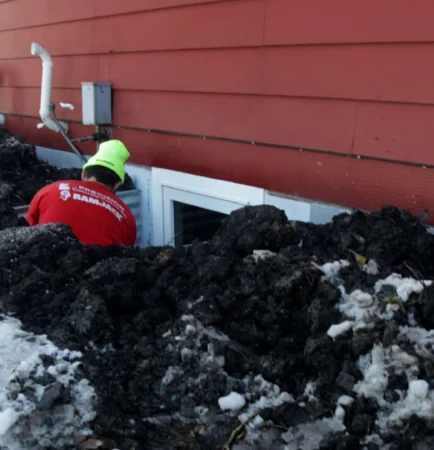
- Excavation — soil is excavated around the exterior perimeter of the foundation, typically down to the footing, which means digging six to ten feet deep in many basement applications
- Wall cleaning and preparation — the exterior face of the foundation wall is cleaned of soil, old coatings, and deteriorated concrete
- Waterproof membrane application — a bituminous membrane, rubberized asphalt coating, or drainage board system is applied to the full exterior wall face from footing to grade
- Exterior drain tile installation — a perforated pipe is laid at the footing level on the exterior, directing groundwater away from the foundation
- Filter fabric and gravel backfill — the excavated trench is filled with gravel and filter fabric to facilitate drainage while preventing soil migration into the pipe
- Soil backfill and grade restoration — the excavated soil is replaced and graded away from the foundation
Side-by-Side Comparison
| Factor | Interior Drain Tile | Exterior Waterproofing |
|---|---|---|
| How water is managed | Caught inside and pumped out | Blocked before reaching the wall |
| Disruption to property | Interior only — landscaping untouched | Significant exterior excavation |
| Disruption to occupants | Basement work for 1–3 days | Major exterior dig for 3–7+ days |
| Typical cost (average home) | $4,000–$10,000 | $10,000–$30,000+ |
| Addresses wall seepage | Yes — manages it once it enters | Yes — prevents it from entering |
| Addresses hydrostatic floor pressure | Yes — primary strength | Limited — floor is not addressed |
| Handles active wall cracks | In combination with crack injection | Yes — membrane covers exterior face |
| Long-term maintenance | Sump pump servicing (annual) | Minimal once installed |
| Disrupts landscaping | No | Yes — plantings, paths, decks must move |
| Best for | Most residential situations | New construction or severe exterior failures |
When Interior Waterproofing Is the Right Choice
The majority of residential basement water problems — groundwater rising through the floor-wall joint, hydrostatic pressure pushing through wall pores, minor seepage through existing cracks — are best and most practically addressed with an interior drain tile system.
Interior systems are the right choice when:
- The basement is finished or partially finished, and you want to minimize disruption
- Landscaping, decks, driveways, or other structures make exterior excavation impractical
- The primary water entry is at the floor-wall joint (cove joint) or through the floor under hydrostatic pressure
- You need a cost-effective, permanent solution with a proven track record
- The foundation wall itself is structurally sound — the wall isn't failing, it's just allowing water to seep through
When Exterior Waterproofing Is Worth the Extra Investment
Exterior waterproofing is justified — and sometimes the only appropriate solution — in specific circumstances:
- New construction or major exterior renovation where excavation is already happening — the incremental cost of adding a waterproof membrane at this stage is far less than excavating later
- Severely deteriorated foundation walls where the exterior concrete face is spalling, crumbling, or failing in ways that cannot be addressed from inside
- High water tables combined with significant lateral pressure, where preventing water contact with the wall is critical to slowing deterioration
- Historic foundations built from stone or early concrete block, where interior cutting would compromise the structure
Can Crack Injection Alone Solve a Wet Basement?
Occasionally, yes — but only if the source of moisture is a specific, identifiable crack and the water table is not actively pushing against the wall. Polyurethane crack injection seals the crack itself, preventing water entry through that specific point. If the basement is otherwise dry and the crack is the only entry point, injection alone may resolve the problem.
In most cases of a chronically wet basement — where water enters through multiple points, through the wall face, or through the floor under pressure — crack injection is a useful component of a comprehensive waterproofing strategy, not a standalone solution.
Real Cost Breakdown — What to Expect
These figures represent typical ranges for average-sized residential basements in most US markets. Prices vary based on basement perimeter, access, sump pump specification, and local labor rates.
Interior drain tile system: $4,000–$10,000 for most residential applications. This includes concrete cutting, drain pipe installation, sump pit and pump, gravel, and concrete repair. Battery backup sump pump adds $500–$1,500.
Exterior waterproofing: $10,000–$30,000+, depending on excavation depth, foundation perimeter, landscaping reinstatement, and membrane type. Homes with extensive decks, mature landscaping, or difficult access cost more.
Crack injection only: $400–$1,500 per crack, depending on length and method (epoxy vs polyurethane).
FAQ: Basement Waterproofing Methods
Find Answers to our Question about Our Consulting Coverage Options.
Still Have Questions?
We’re here to help you!
Interior drain tile installation does require cutting the perimeter of the concrete floor slab. Precision Concrete Cutters uses diamond-blade saws for clean, precise cuts and performs GPR scanning beforehand to identify any utilities or conduits beneath the slab. The floor is fully restored with new concrete after the system is installed.
Those deposits — called efflorescence — are mineral salts left behind when water evaporates through the concrete. They indicate ongoing moisture movement through the wall. Waterproofing eliminates the moisture source, which prevents new efflorescence from forming. Existing deposits can be brushed off after the wall dries out following waterproofing.
For finished basements, interior drain tile is almost always preferred — it requires less disruption to the structure, leaves landscaping intact, and is completed more quickly. Exterior waterproofing requires significant exterior disruption but does not require removing interior finishes. For unfinished basements, both methods are practical.
The right method depends on your specific water source, foundation type, budget, and site conditions. Precision Concrete Cutters provides free basement assessments, identifies exactly where water is entering and why, and recommends the most appropriate and cost-effective solution for your situation — with no obligation and no pressure toward a particular method.
Not sure which waterproofing method your basement needs? Precision Concrete Cutters provides free, no-pressure basement assessments. We’ll identify the source of the problem and tell you honestly which solution fits — interior, exterior, or a combination of both.

0 comments on “Interior vs Exterior Basement Waterproofing: A Straight-Talking Comparison (With Real Cost Figures)”
Pellentesque sollicitudin congue dolor non aliquam Morbi volutpat nisi vel ultricies urnacon dimentum sapien neque lobortis tortor, quis efficitur mi ipsum eu metus Praesent eleifend orci sit vehicula.